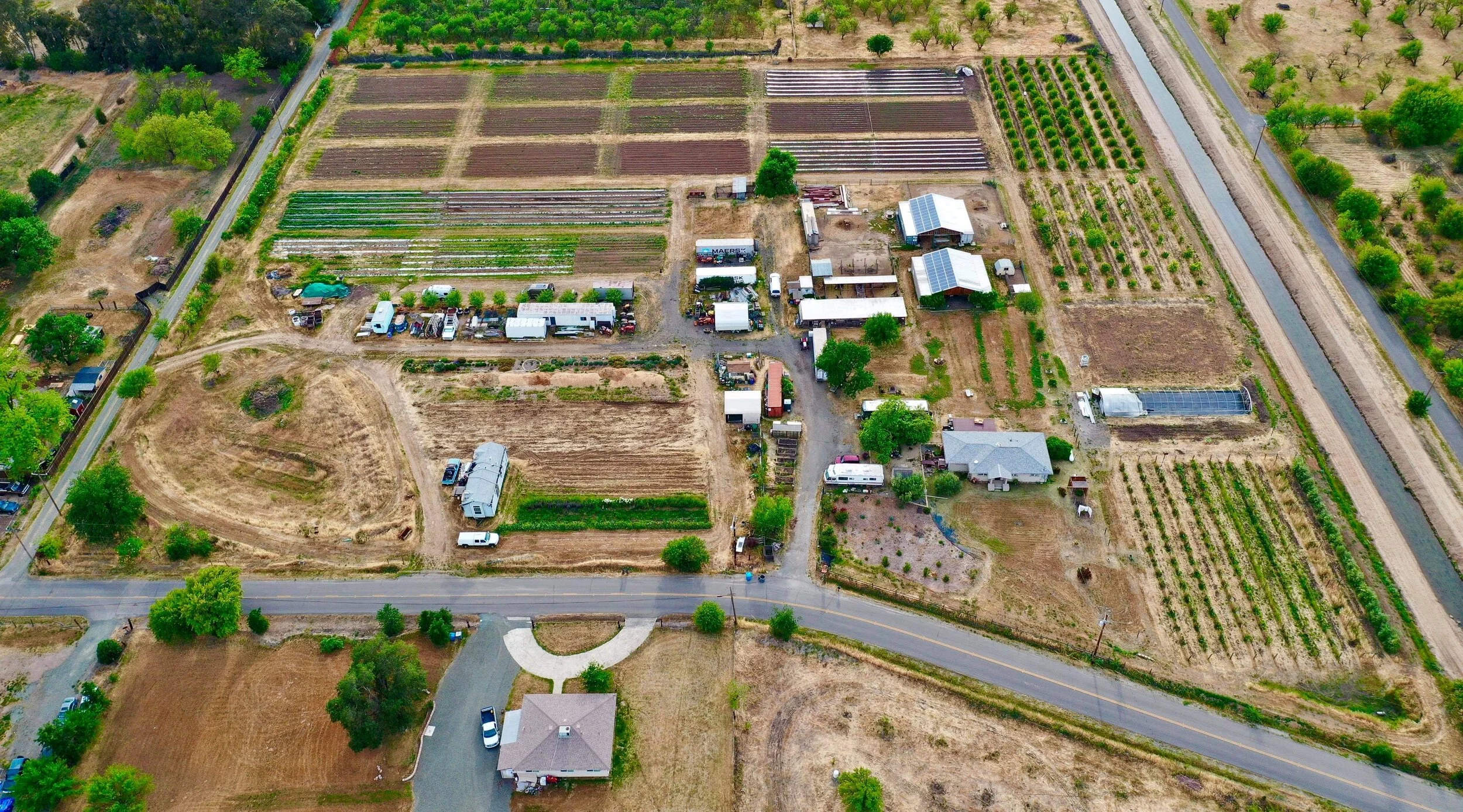
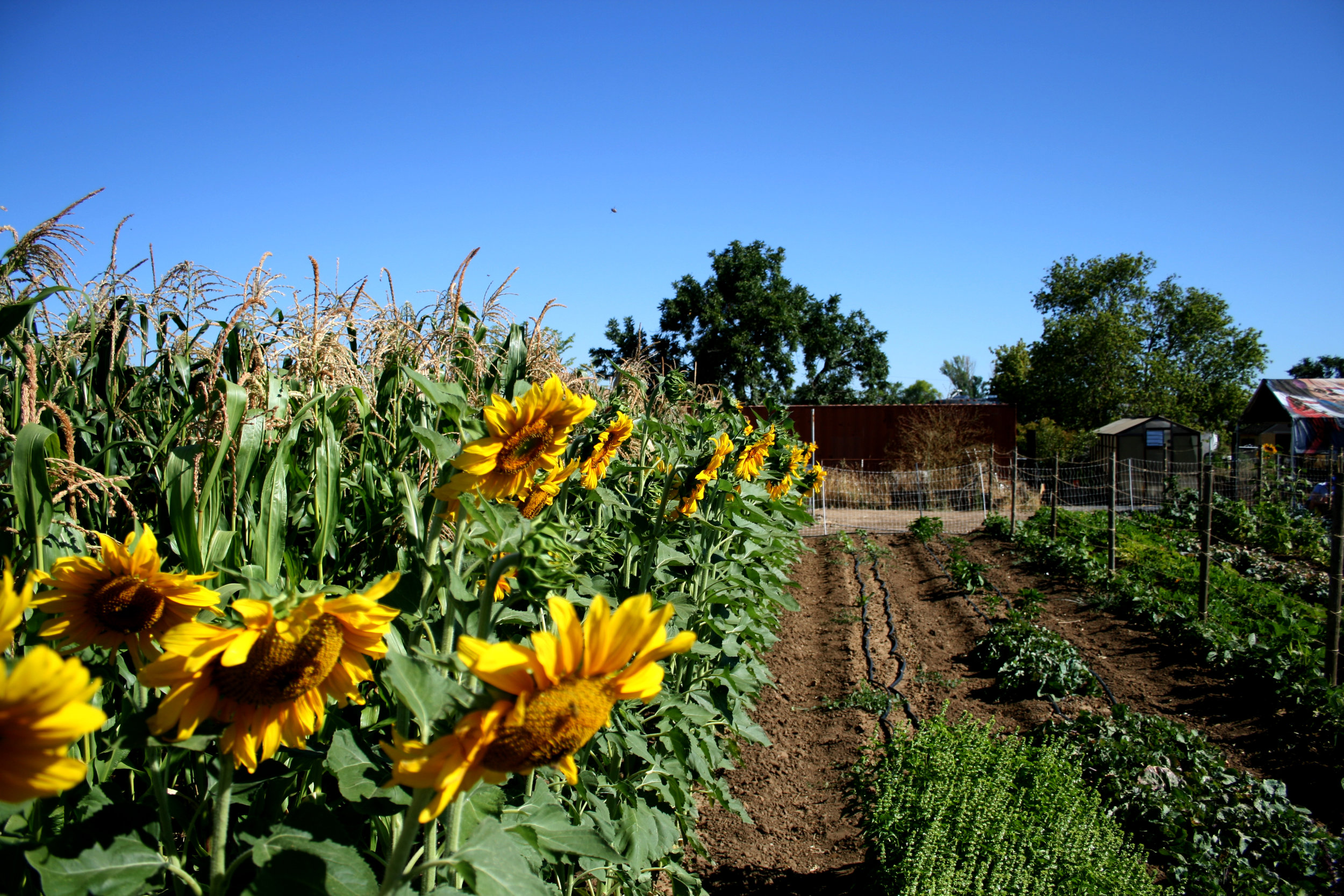
Lockewood Acres was inspired by an old 1954 publication talking about the benefits of earthworms. In the center of the book there was a layout of “Serenity Acres” entitled “An Earthmaster Home”, a farm focused on self-sustenance. My wife and I both agreed, “We can do this!” Our original intent was to build a property that would sustain our family with wholesome and natural food. Going organic was inspired by my wife and a new outlook we developed about at the land and how we take care of it, particularly our water supply. Our water table is static at only 18’ below the surface, so contaminants can easily enter the water supply. Here in the Sacramento Delta Watershed, this plays a big role in how we farm, how we control runoff, and how we nurture the soil.
THE GARDEN
THE ORCHARD
This small 63 different tree orchard (and growing) was designed to have an early, mid and late season verity of each family that had hopefully earned the coveted Taste Test Winners.
planted 1/31/12
Peaches *
Eva’s Pride 6/1, Springcrest 6/15, Kim Elberta 7/10-8/1, O'Henry 8/1 - 8/15, O'Henry, Indian Free 8/25 - 9/10, Cherum 6/15
Nectarines *
Arctic Star 6/10-6/30, Flavortop June, Harko 7/1 - 7/15, Cavalier 7/15-8/1, Liz Late Nectarin, Cinnamon Pear 7/15-8/1, Robada Apricot 6/10.
Plums & Apricots *
Burgundy Plum 7/20 - 8/10, Green Gage Plum 8/1 - 8/15 , Late Santa Rosa Plum 8/20 -8/30, Satsuma Plum 8/10 - 9/5, Emerald Beauty Plum 9/1 - 10/10, Gold Kist Apricot 5/26 - 6/5, Tomcot Apricot 5/21
Persimmon & Asian Pear *
Hachiya 11/10, Fuyu 11/15, Hosui Asian Pear 8/1 - 8/20 , 20th Century Asian Pear 8/8, Yellow Plum 7/15, Blenhiem 6/25, Earli Autum 8/1 - 8/25,
Apples & Pears *
Anna Apple 7/1 - 7/24 , Honey Crisp Apple 8/5 - 8/24, Red Fugi Apple 9/15 - 10/12, Pink Lady Apple 10/12 - 11/2, Granny Smith Apple 10/15 - 11/10, Seckel Pear 8/10 - 9-5, Bartlet Pear 8/5 - 8/20,
Figs & Misc *
Cot-n-Candy Aprium 6/15 - 6/25, Flavor King Pluot 8/12 - 9/2, Flanders Fig 8/10 - 11/5, Oshorne Fig 8/10 - 11/5, Burre D Anjou 10/1 , Comice 9/15 - 10/5, Seckel "Sugar Pear 1790" 8/10 - 9/5
Citrus
Washington Navel Orange Jan, Minneola Tangelo Jan., Cara Cara Navel Orange (later than Washington) Seedless Midnight Valencia June, Moro Blood Feb., Sanguinelli Blood Orange Feb.
Owari Satsuma Late Jan., Clementine Feb., Gold Nugget mid March, Meyer Lemon Jan., Lisbon Lemon Jan., Santa Teresa Lemon Jan.
Bear seedless Lime Minneola Tangelo Jan., Oroblanco Grapefruit Feb., Australian Finger Lime
THE BARN
Barn and Livestock
Discover the beauty of heritage breeds! Heritage breeds have an advantage over the traditional livestock breeds because they are better adapted to their environment and come from a diverse genetic background. Unfortunately many heritage breeds have become extinct due to the practices of modern farming. For instance, did you know that 99 percent of all turkeys raised in the U.S. are Broad-Breasted Whites, a single turkey breed specifically developed to have a meaty breast? We have two sheep, five turkeys, two goats and lots of chickens roaming freely over the property! Eggs are available as part of our CSA share.
Free Range Chickens
We have Welsummer chickens that lay a dark brown egg (this is the "Corn Flakes" bird). We have French Black Copper Maran birds that lay a super dark brown, almost chocolate colored egg. We have Americana chickens that lay blue or green eggs. We also have Rhode Island Red, Buff Rock, Partridge Rock, Delaware, and all the babies of Rodger (an Easter Egger, pictured here) and all his girls of the above breeds.
Dairy Goats
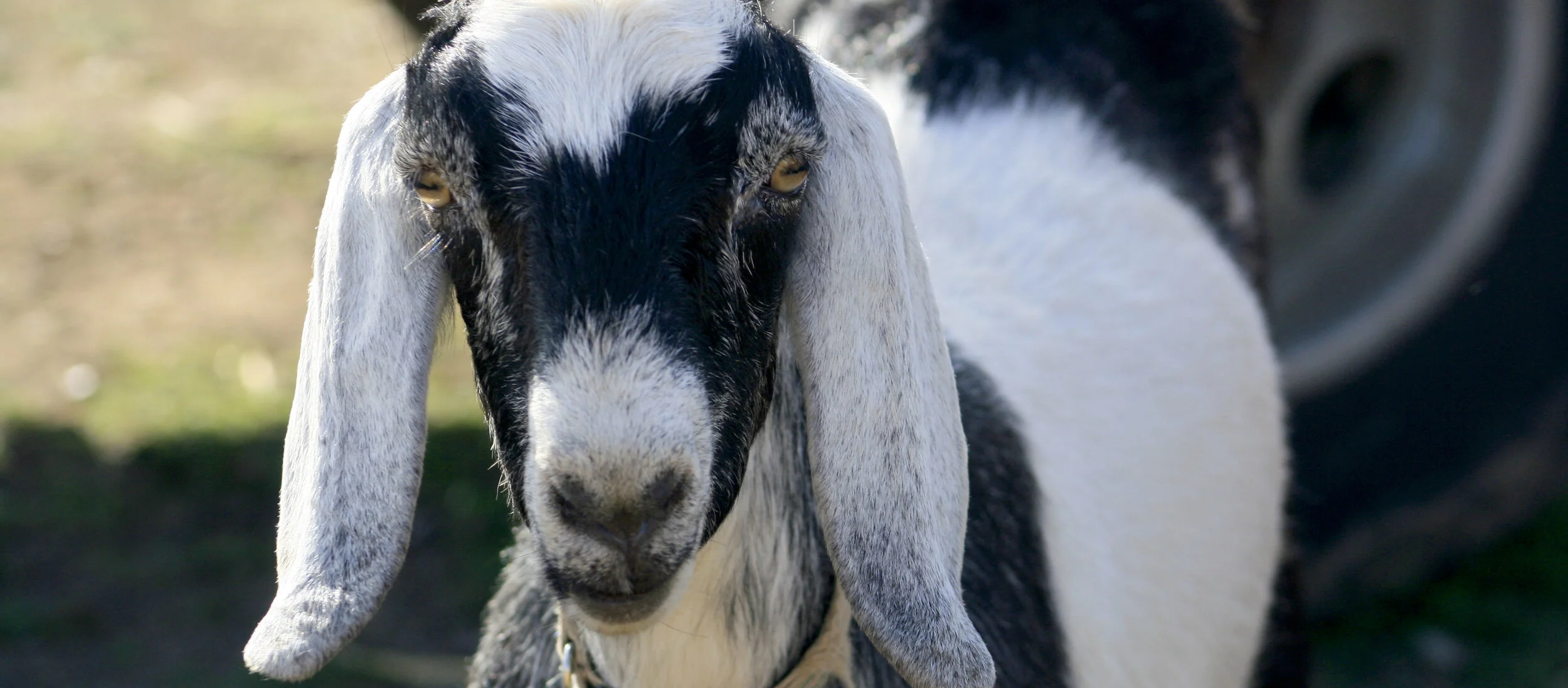
We have LOTS of goats: all purebred Nubians- Gina, Stella, Conie, Darla and Manny and of course all the kids!. Our Nubians are out of a great line of sweet tasting and heavy milk producers who are expecting at anytime. Having the University of Davis so close it is a great tool to be able to take advantage of new information and technology. We had our girls ultra-sounded to determine the number of babies so we could formulate their food ration for proper nutrition.
St. Croix Sheep
We currently have five sheep that help mow the grass in the orchard. These beautiful pure white sheep are a wool-less or hair breed which have no top teeth and a solid black tongue. Due to the lower amount of lanolin in the hair sheep breeds the meat is much sweeter and less gamy then traditional wool lamb breeds. The St. Croix sheep are also on the Slow Food Arc of Taste list.
Hogs
Our piggies are the best recyclers. They turn left over veggies into bacon. This addition to the farm allows us to reduce the amount of bi-product that leave the farm. Our pigs are originally form Hungary, they are also on the Slow Food Ark of Taste. This is an old world pig that is prized for its charquitery value and it lard. They take longer to grow to size but they are well worth the wait.
THE APIARY
What's so Special About Raw Honey?
It's probably not too difficult to remember well what raw honey is when you associate it with uncooked vegetables and meat whereby any form of heating is avoided so as to preserve all the natural vitamins, enzymes and other nutritional elements
Raw honey is the concentrated nectar of flowers that comes straight from the extractor; it is the only unheated, pure, unpasteurized, unprocessed honey. An alkaline-forming food, this type of honey contains ingredients similar to those found in fruits, which become alkaline in the digestive system. It doesn't ferment in the stomach and it can be used to counteract acid indigestion. When mixed with ginger and lemon juices, it also relieves nausea and supplies energy. Raw honey is the healthiest choice amongst the various forms of honey as it has the most nutritional value and contains amylase, an enzyme concentrated in flower pollen which helps predigest starchy foods like breads.
Most honeys found in the supermarket are not raw honey but "commercial" honey, which has been heated and filtered so that it looks cleaner and smoother, more appealing on the shelf, and easier to handle and package. When honey is heated, its delicate aromas, yeast and enzymes which are responsible for activating vitamins and minerals in the body system are partially destroyed. Hence, such honey is not as nutritious as raw honey.
Characterized by fine textured crystals, raw honey looks milkier and contains particles and flecks made of bee pollen, honeycomb bits, propolis, and broken bee wing fragments. Raw and unfiltered honey is relatively low in moisture content (14% to 18%) and has a high antioxidant level. It will usually granulate and crystallize to a margarine-like consistency after a month or two. Many people prefer to spread it on bread and waffles, dissolve it in hot coffee or tea, or use it for cooking and baking.
Among manufacturers there exists no uniform code of using the term "raw honey". There are no strict legal requirements for claiming and labelling honey as "raw". You may find raw honey that are unprocessed but slightly warmed to retard granulation for a short period of time and allow light straining and packing into containers for sale. In this caseFind Article, the honey will not be considered 100% "raw" because it has been heated slightly and therefore rightfully should not be labeled as such by the supplier. Using as little heat as possible is a sign of careful handling.
Copyright (c) 2008 Ruth Tan. Source: Free Articles from ArticlesFactory.com
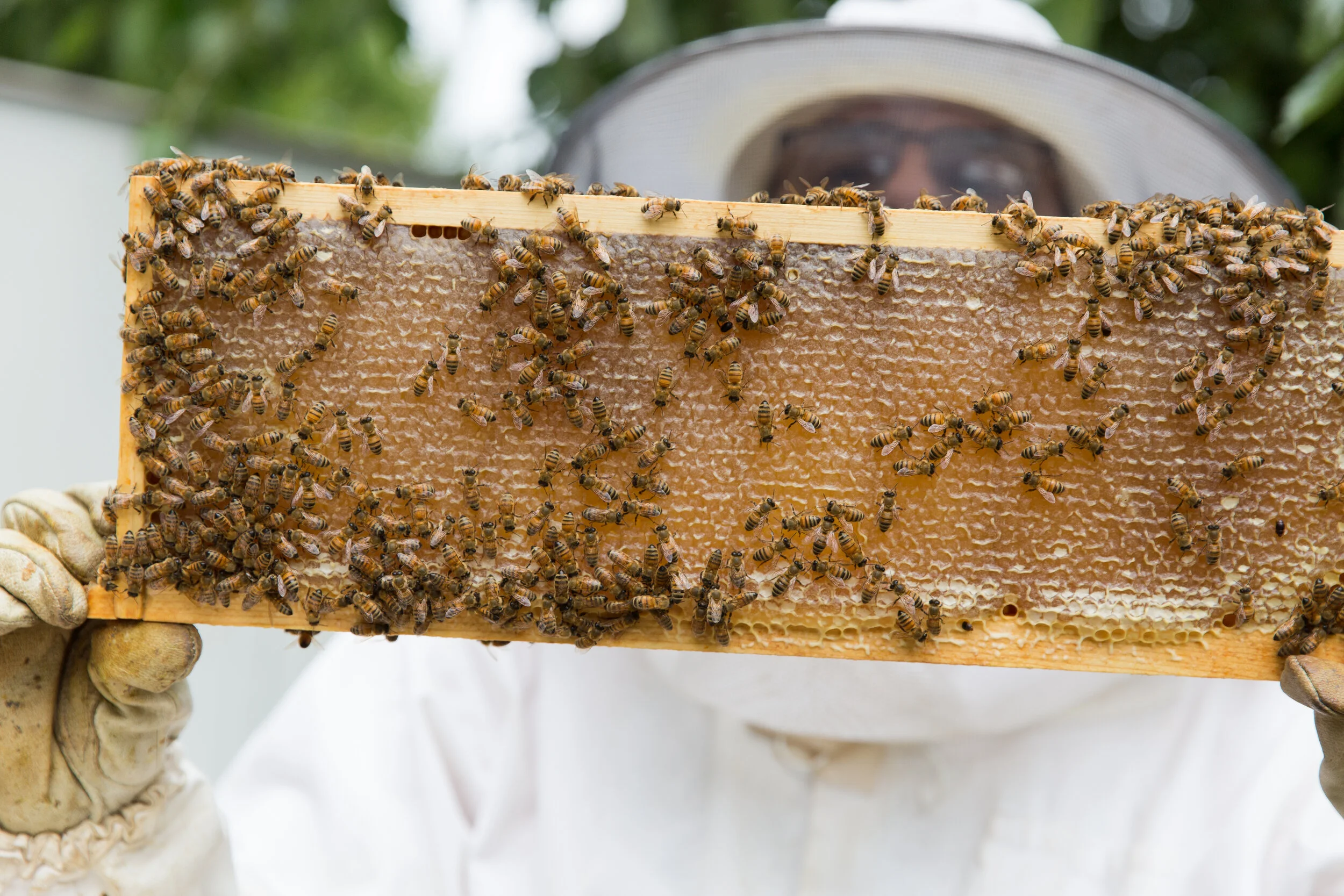
Our fine honey is available by the jar for $12.00. It can be added to your regular Farm Club share or purchased separately at any time.
Note: Our Honey Bees range far and wide in their never ending search for nectar and pollen. Because we cannot guarantee the source plant's organic status of our delicious and nutritious honey cannot be certified as organic nor can any other honey.